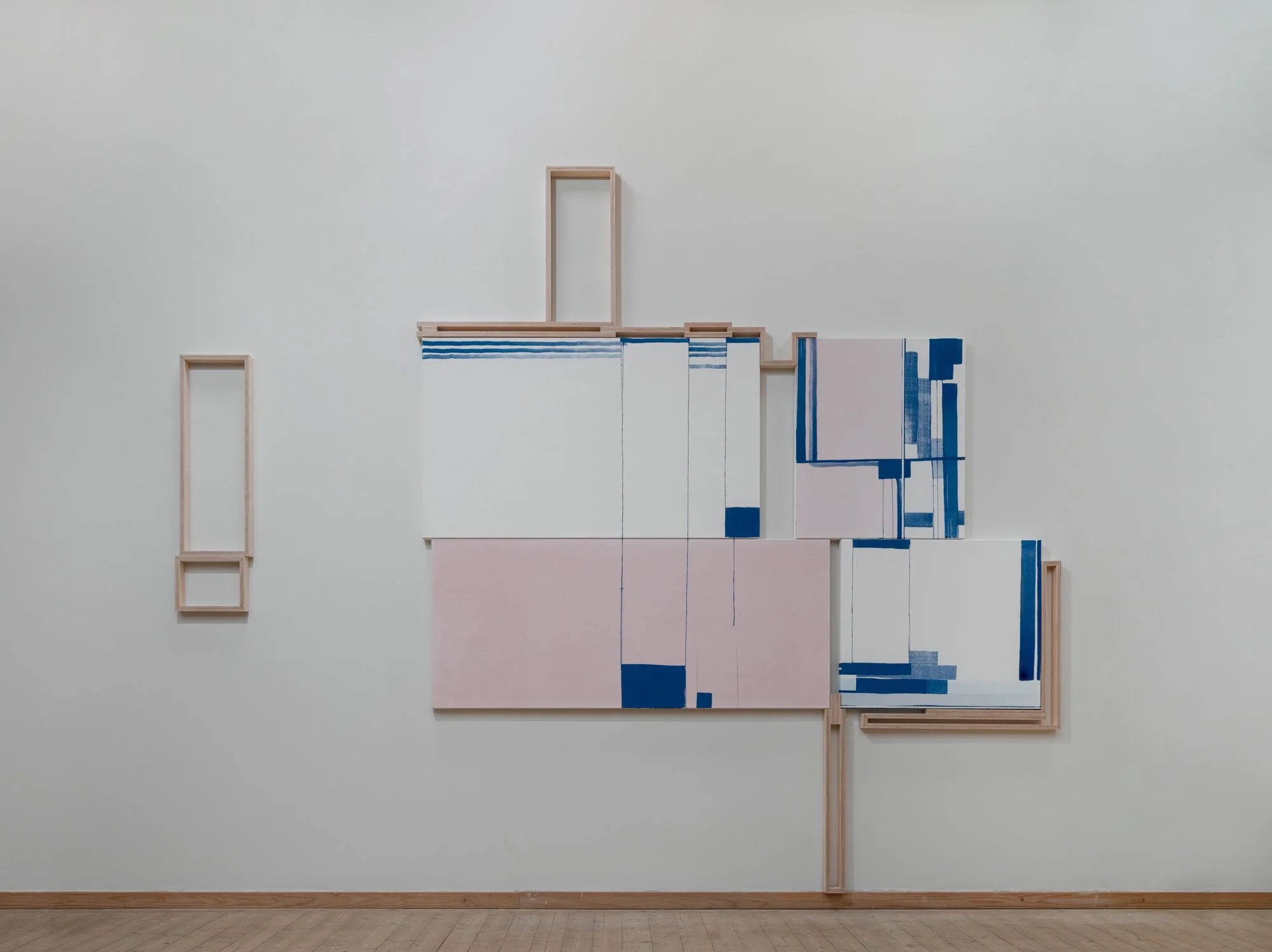
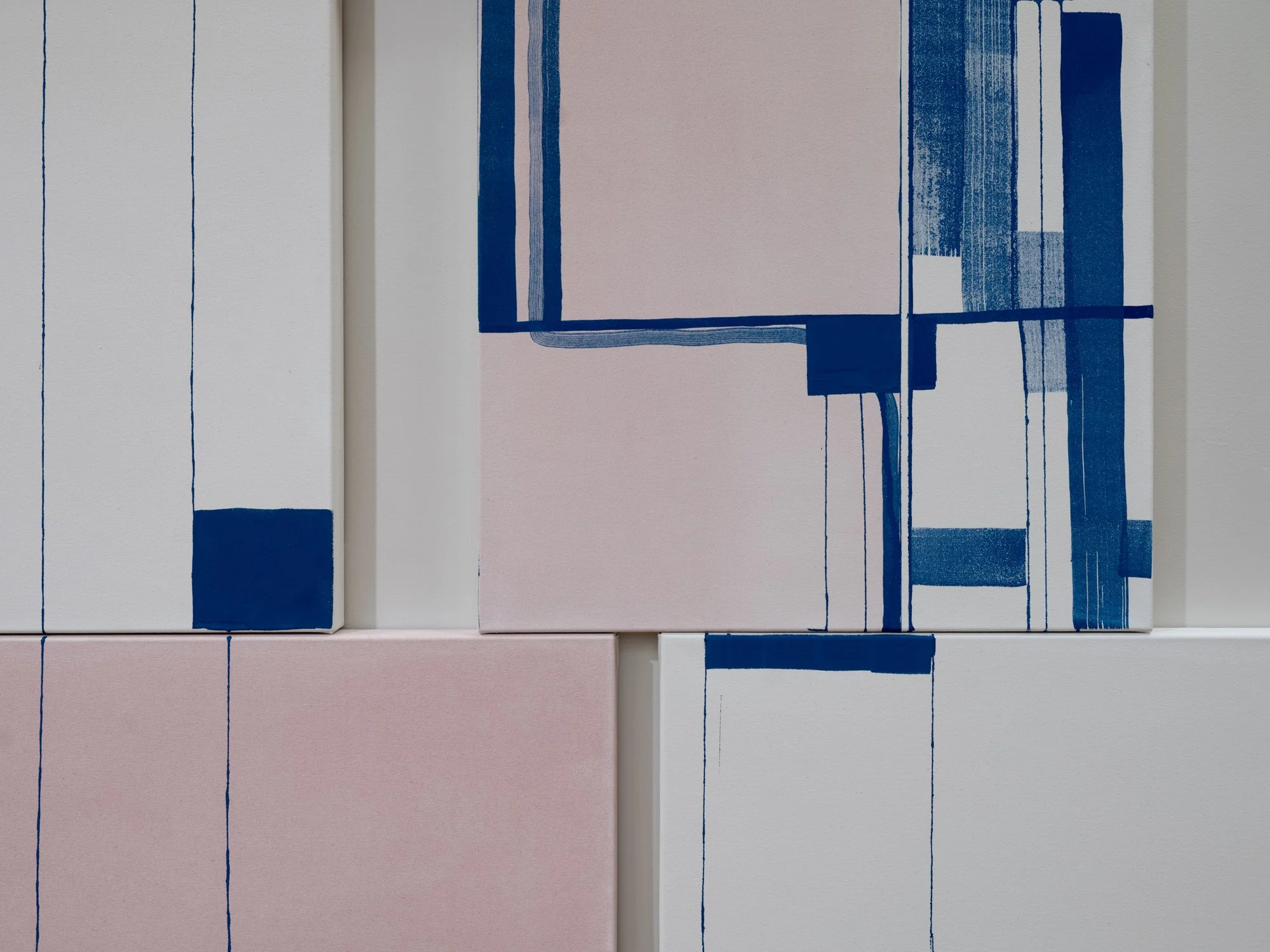
Ting som blir revet ned eller bygget opp III, 2025
Installasjon av maleri og skulpturelle rammer i fem deler
Gesso og pigment på lerret, og skulpturelle rammer i kryssfinér
Installasjon av fem deler totalt: h. 243 x b. 288 cm
Photo: Susann Jamtøy
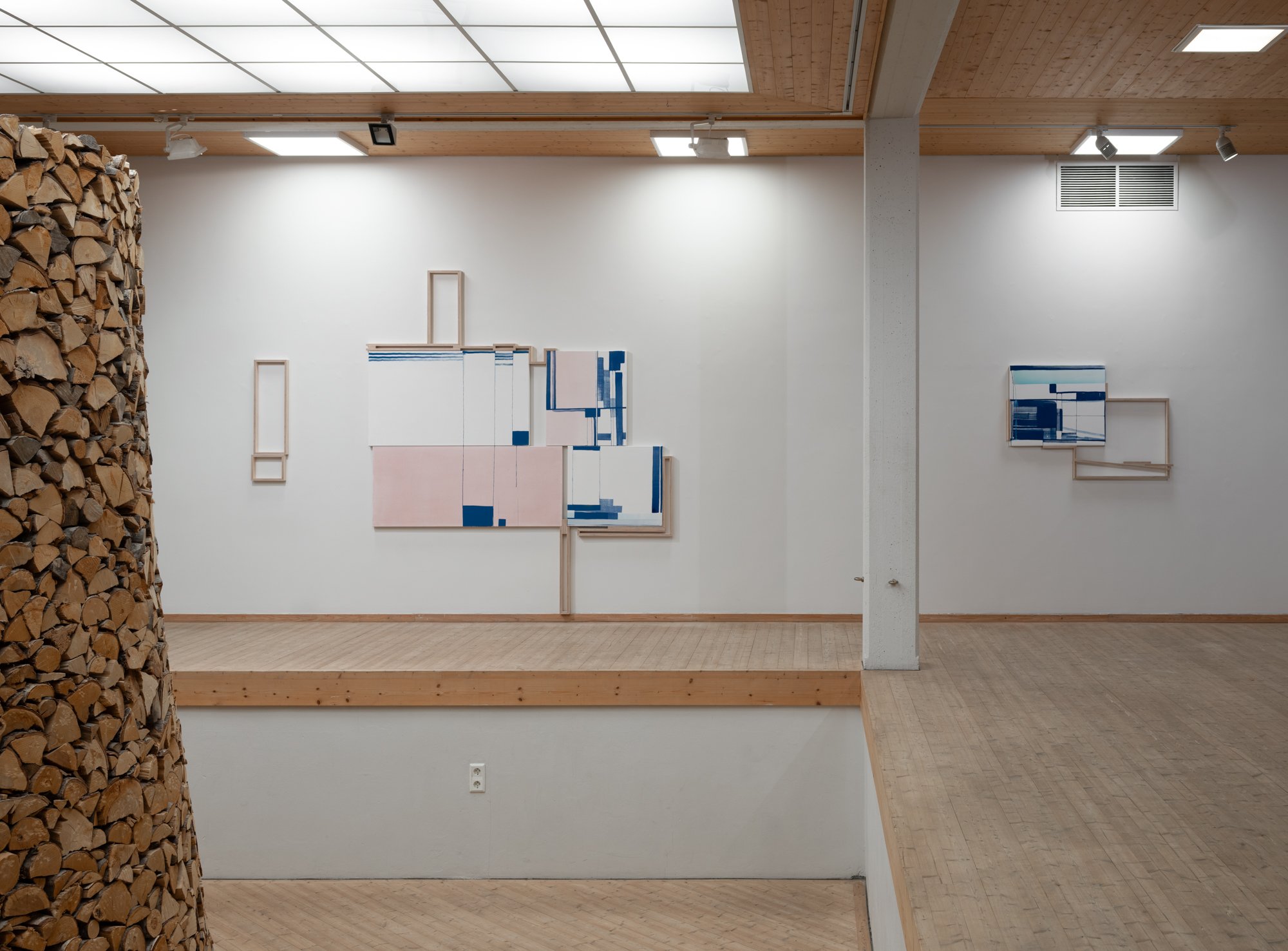
Photo: Susann Jamtøy
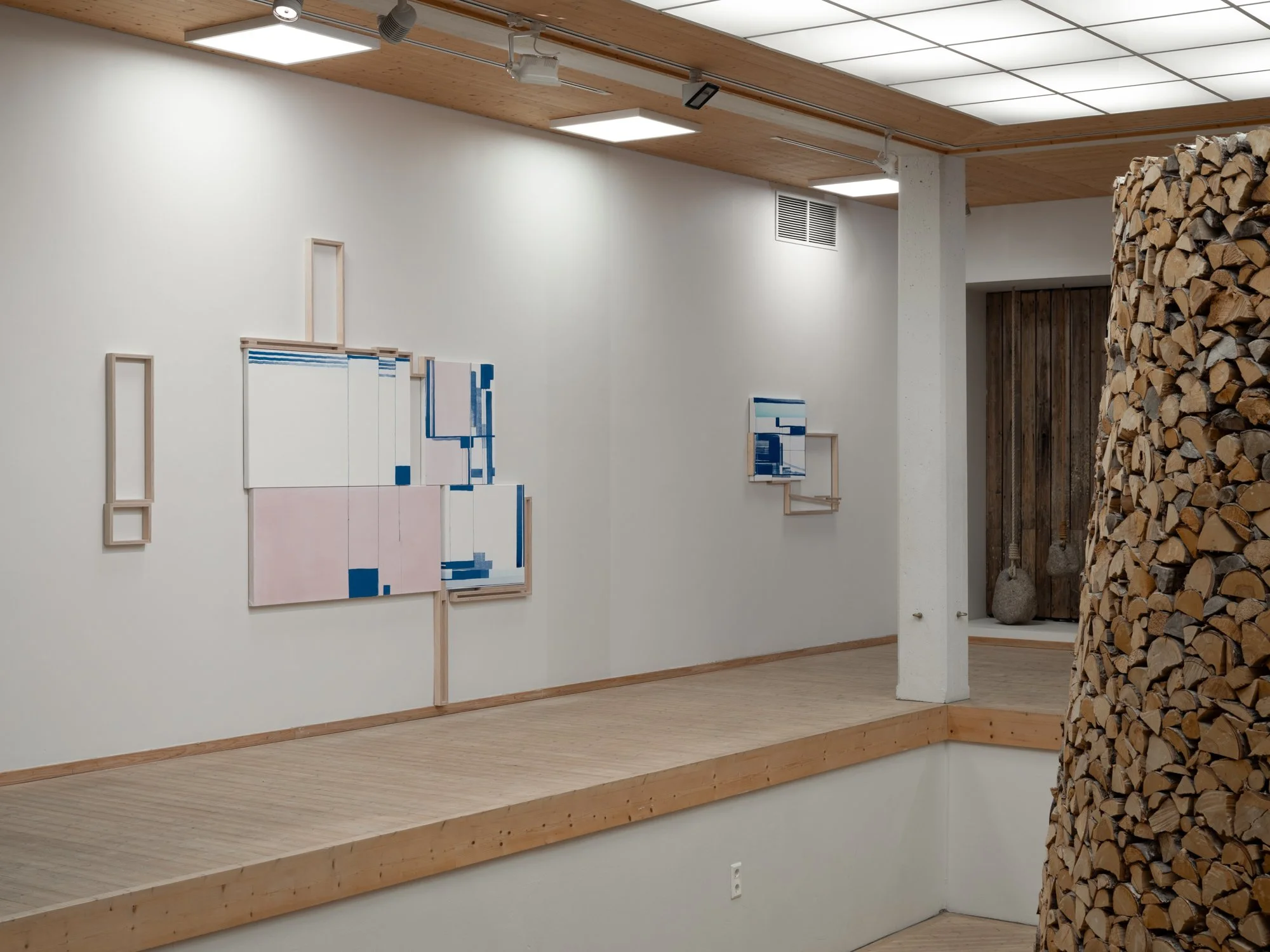
Photo: Susann Jamtøy
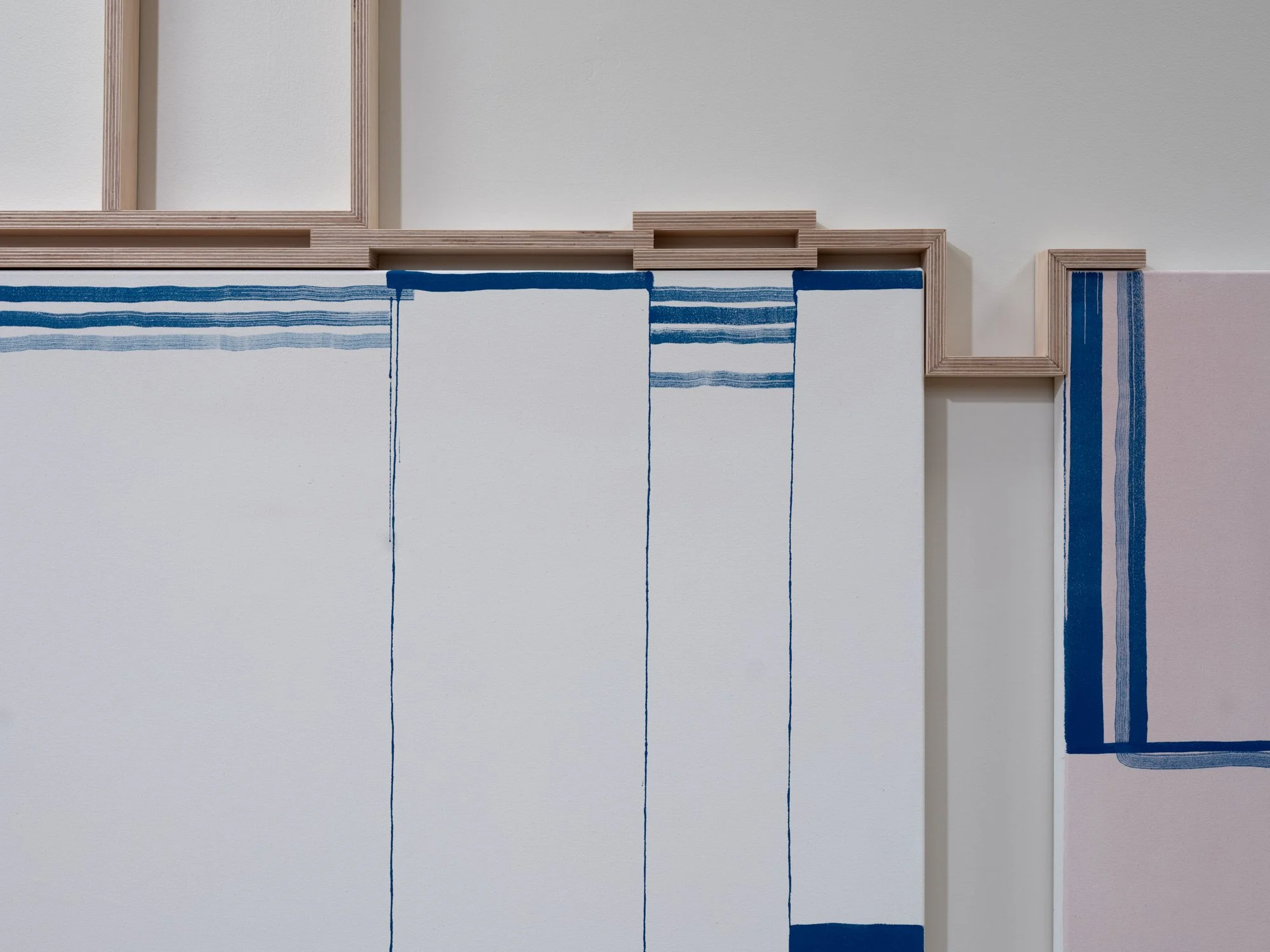
Photo: Susann jamtøy
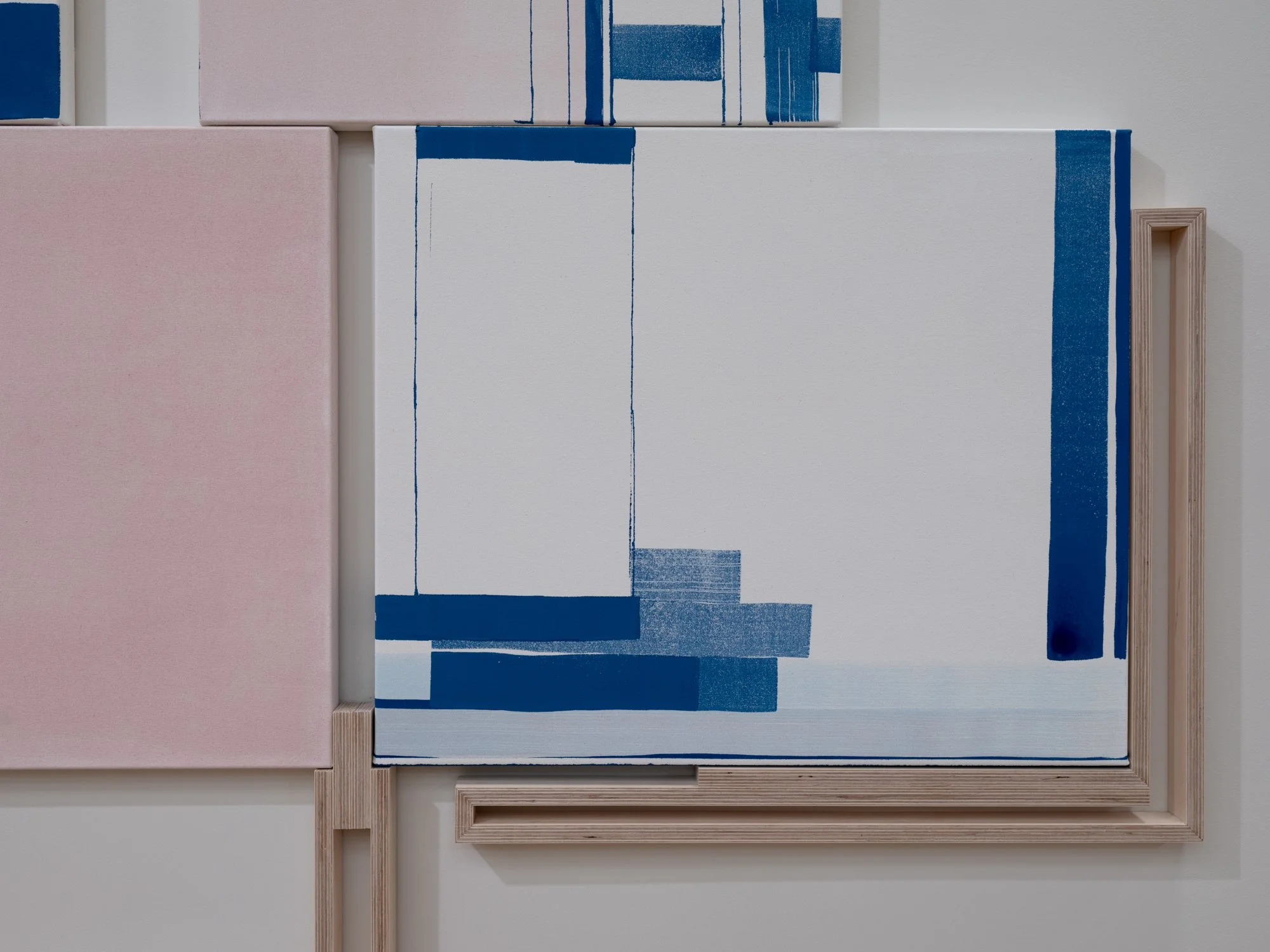
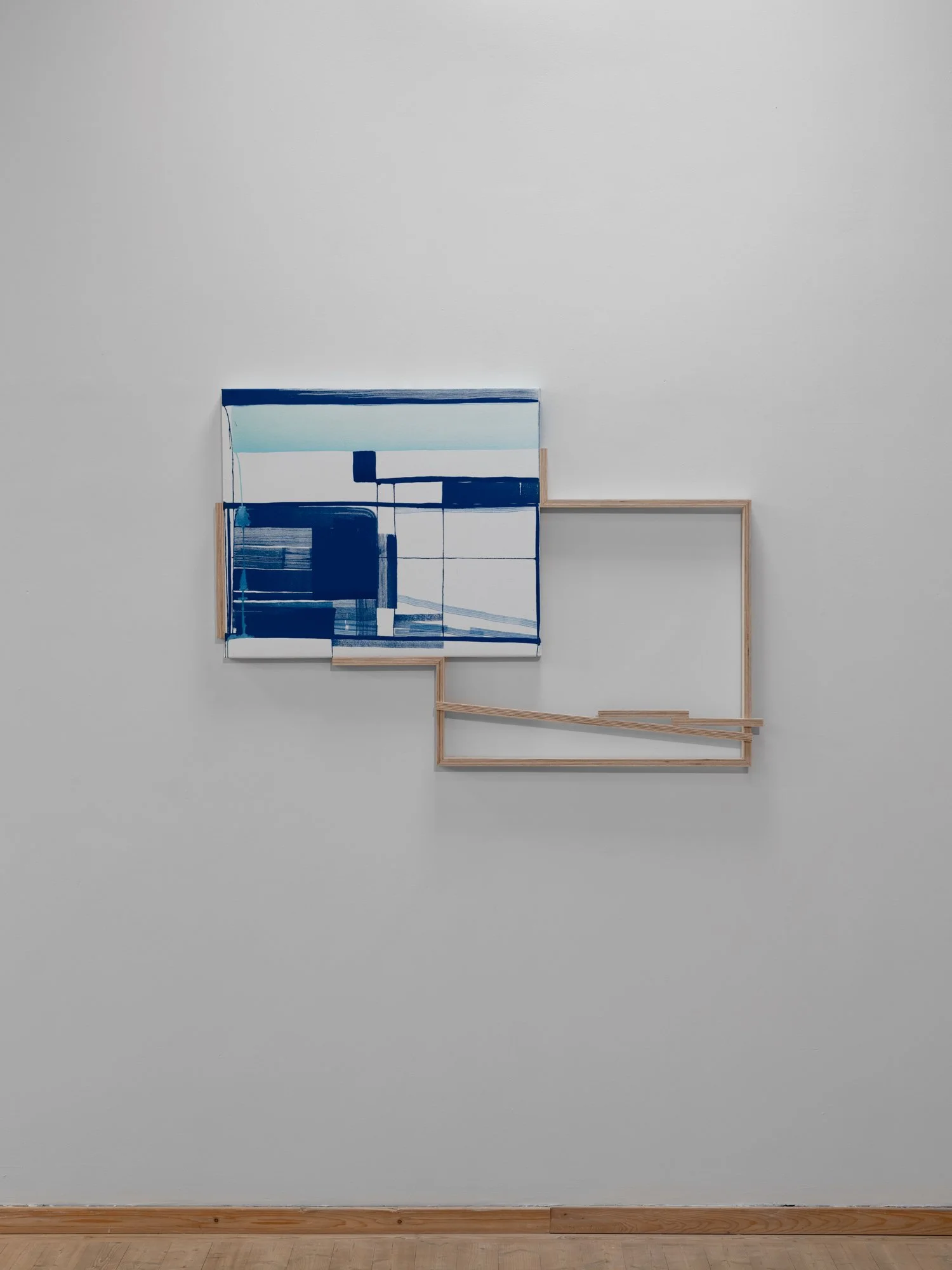
I en rett planlagt linje, 2025
Gesso og pigment på lerret og skulpturell ramme i kryssfinér
Ca. 78 x 118 cm
Photo: Susann Jamtøy
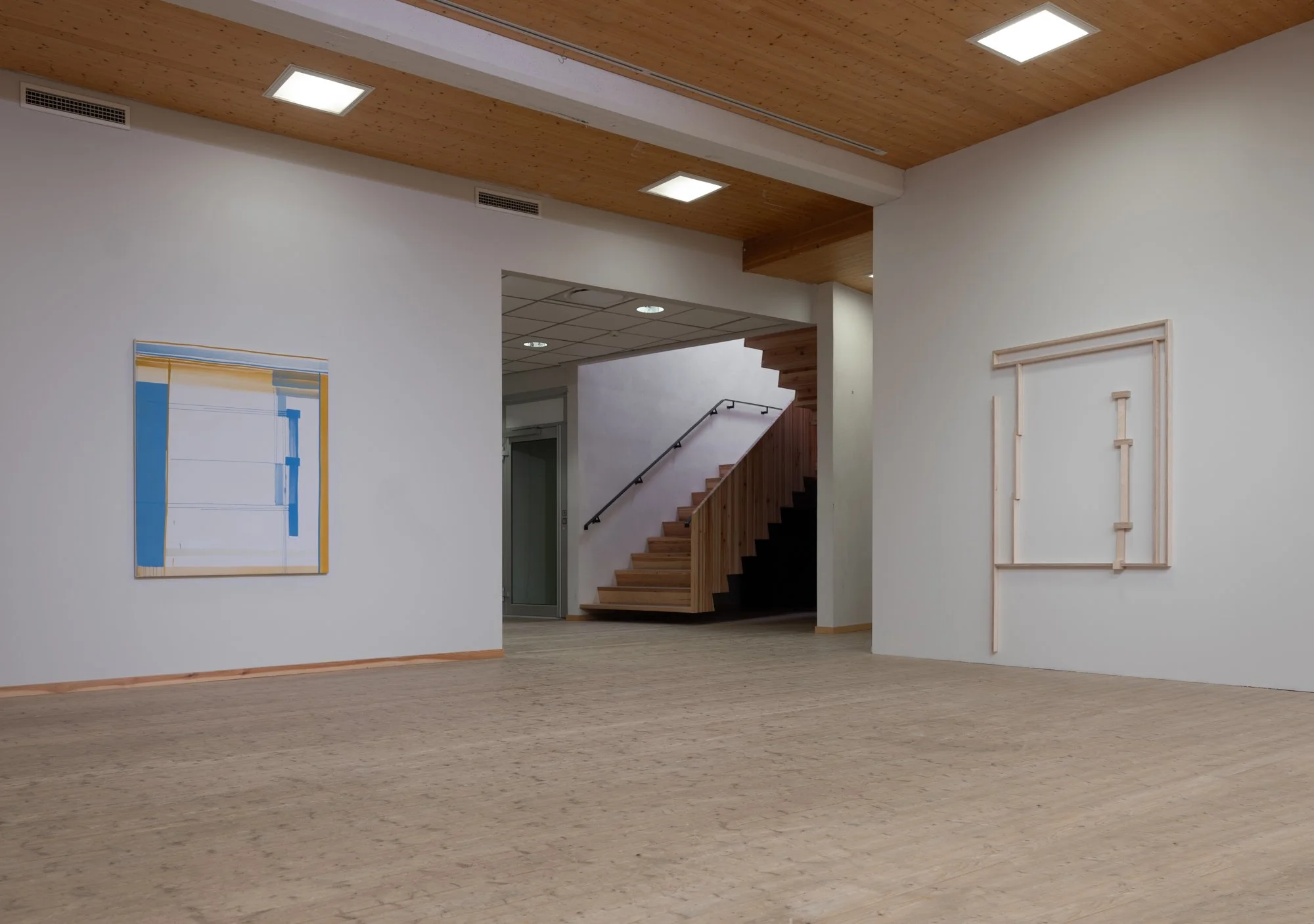
Photo: Susann Jamtøy

Ingen hus eller grinder I
2025 (del 1)
Gesso og pigment på lerret
130 x 110 cm
Photo: Susann Jamtøy

Ingen hus eller grinder I, 2025 (del 2)
Skulpturell ramme i kryssfinér
182 x 110 cm
Photo: Susann Jamtøy
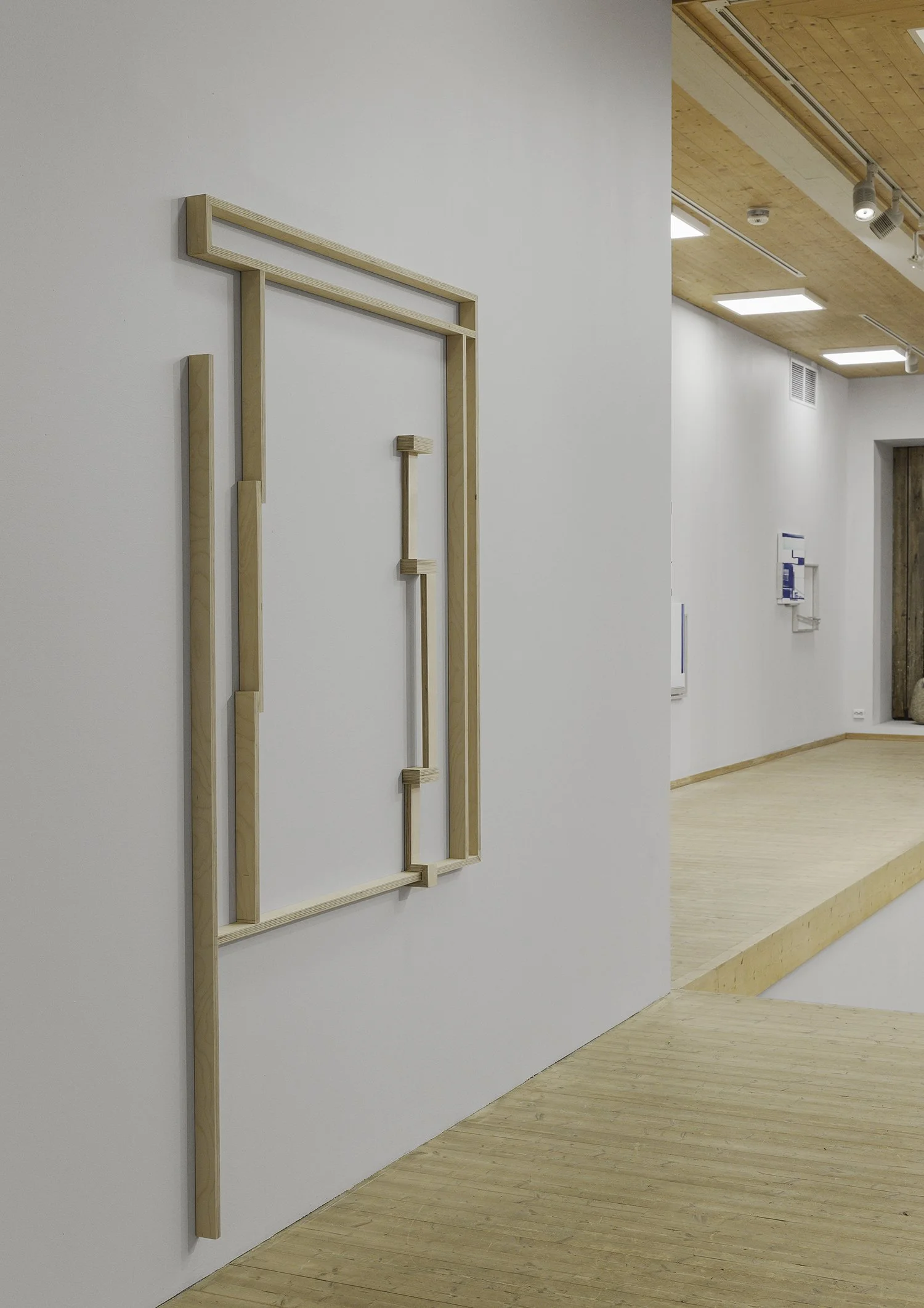
Photo: Lena Johnsen
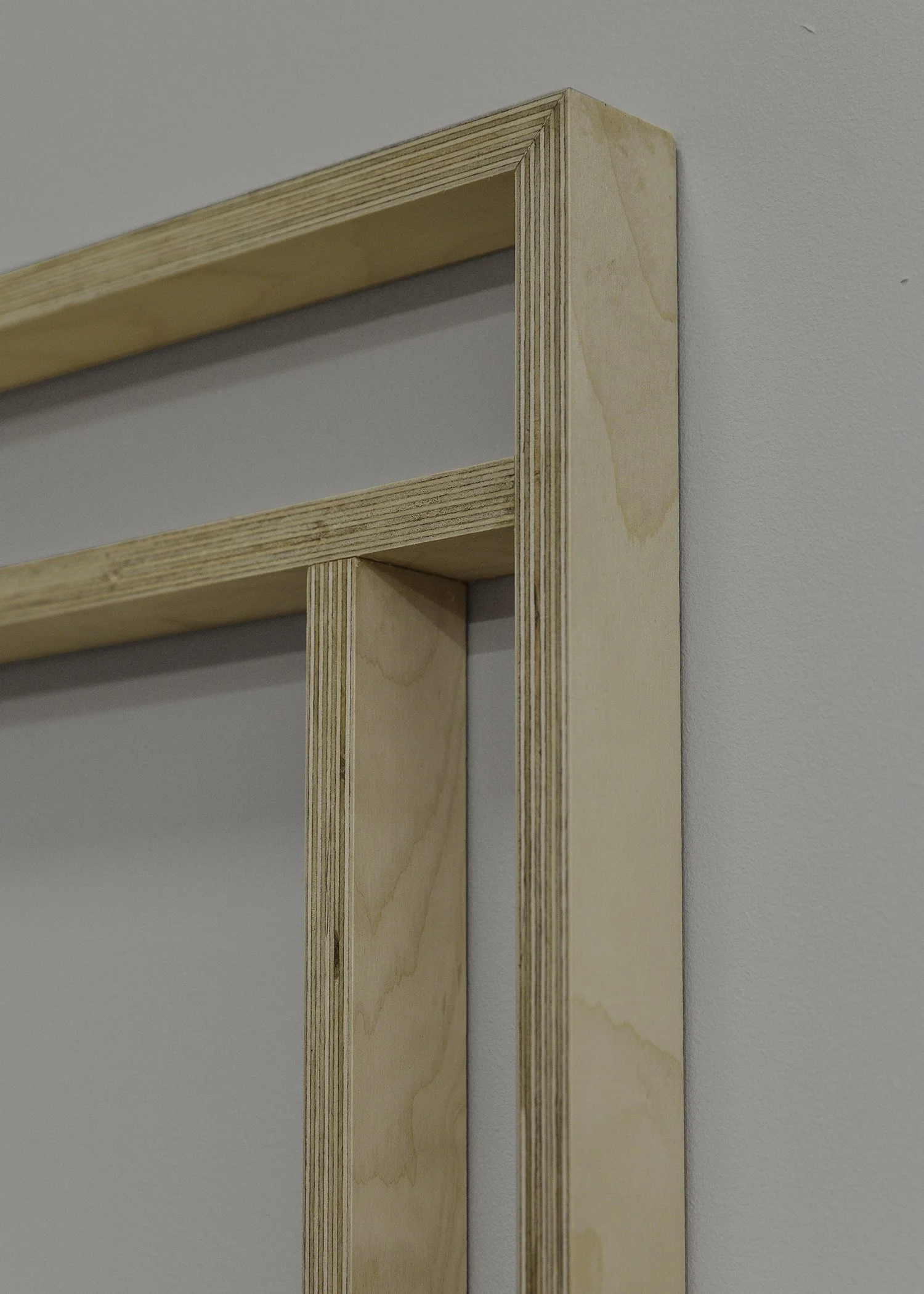
Photo: Lena Johnsen
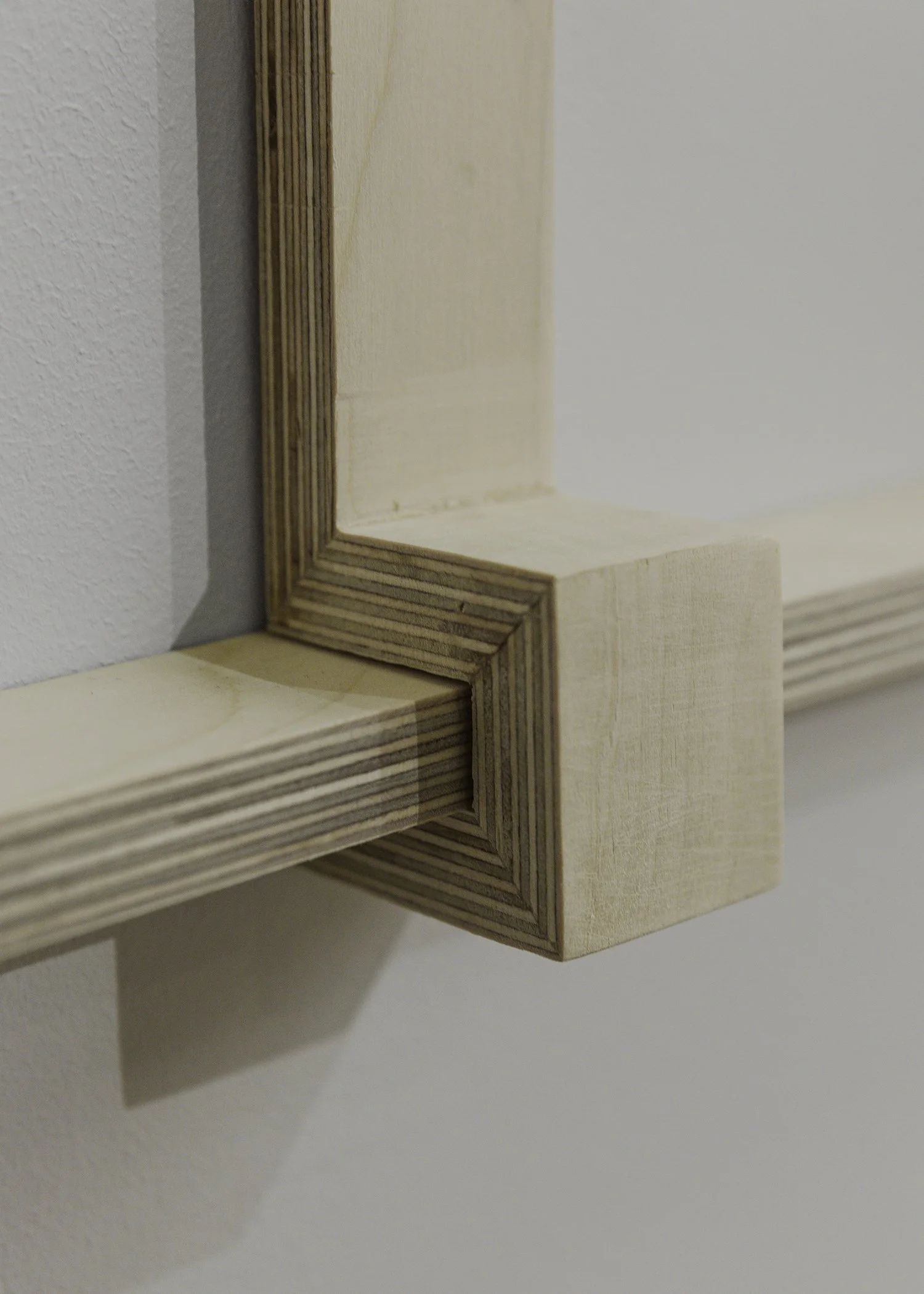
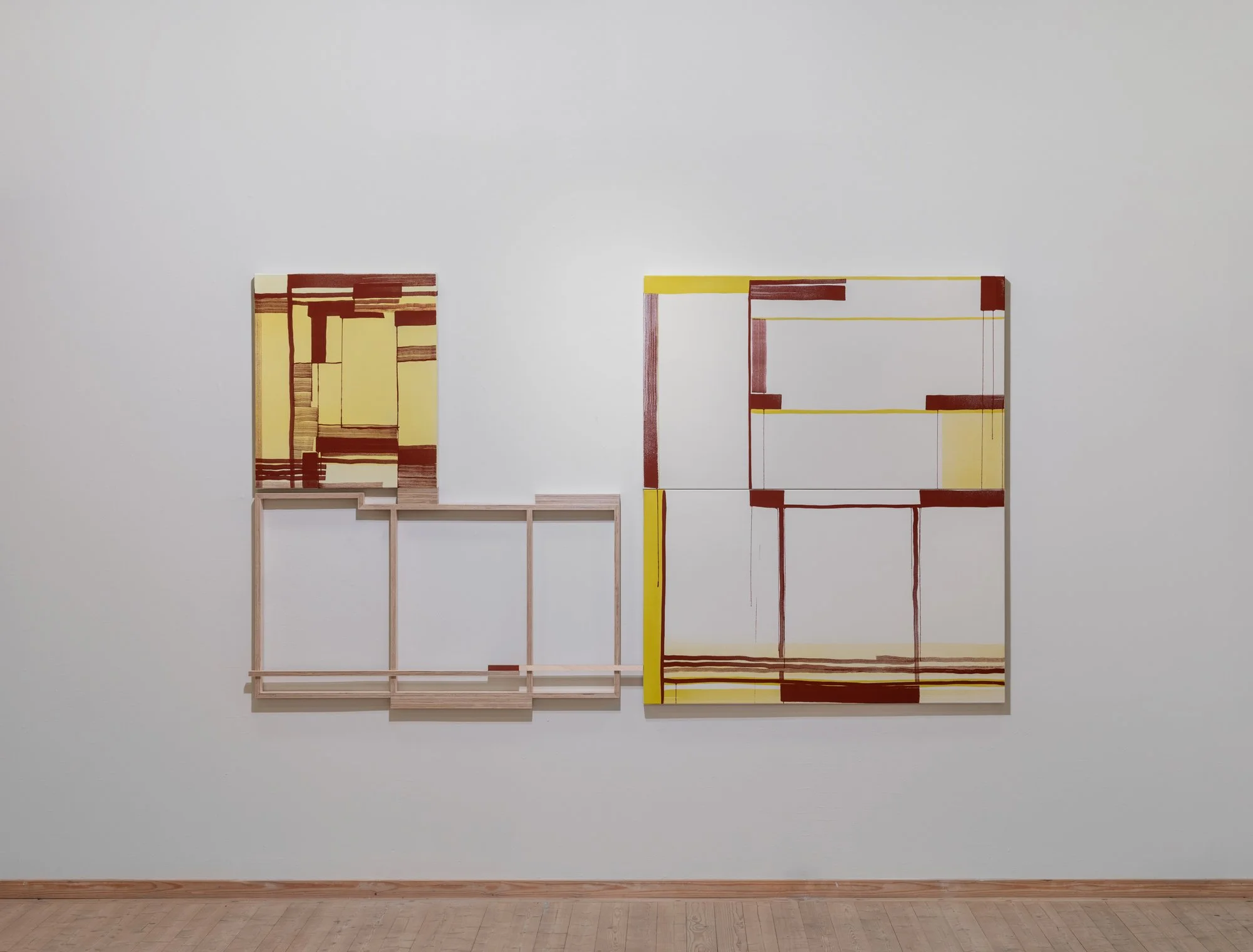
Å Tenke på vindu som motiv II
2025
Installasjon av maleri og skulpturell ramme i fire deler.
Gesso og pigment på lerret, og skulpturell ramme i kryssfinér
Totalt h. 130 x b. 238 cm
Photo: Susann Jamtøy
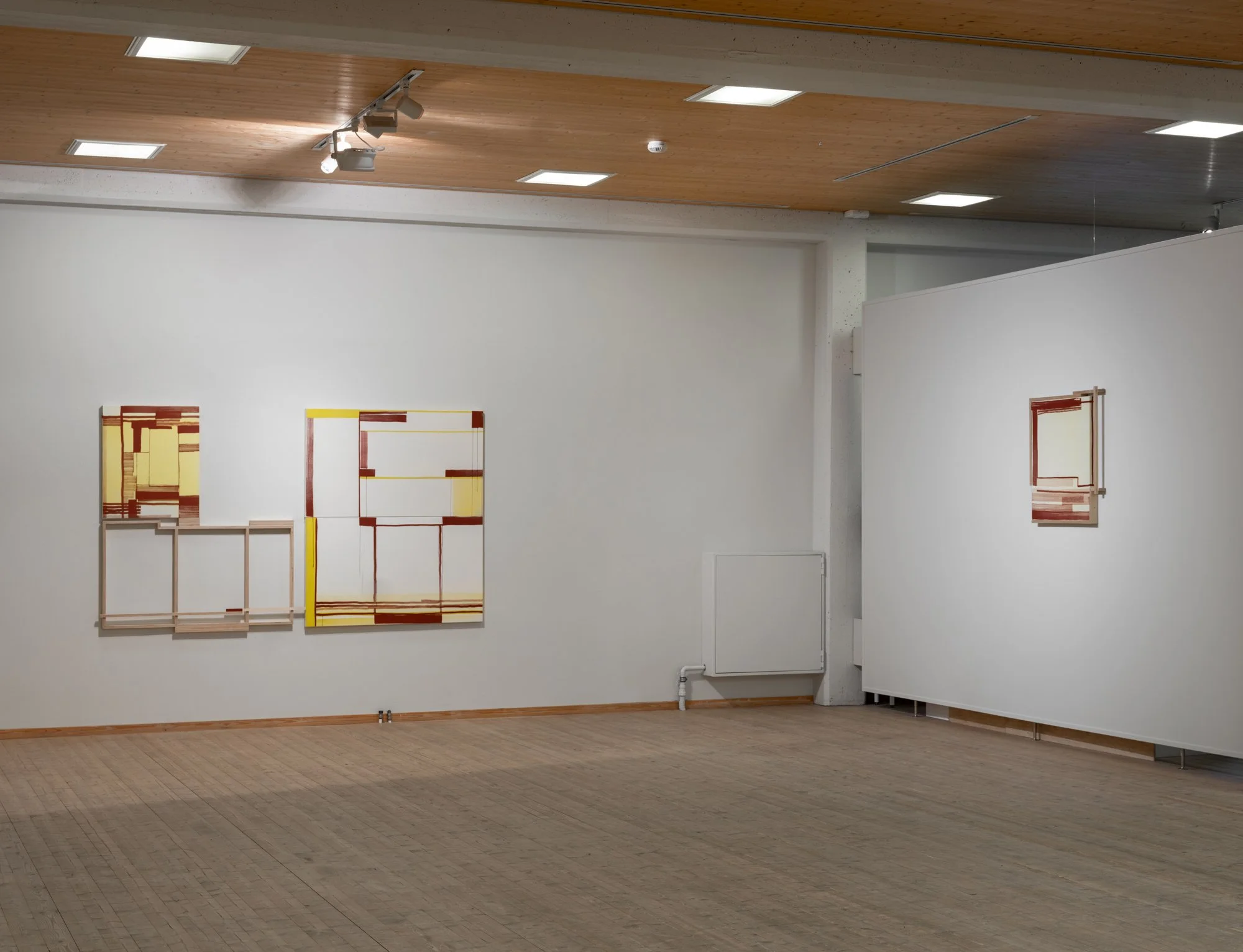
Photo: Susann Jamtøy

En fjerdedel II/A quarter (detail)
2025
Gesso og pigment på lerret og kryssfinér
65 x 65 cm
Photo: Thomas Tveter/Kunstnerforbundet

Ingen hus eller grinder III
2025
Pigment på relieff og skulpturell ramme i kryssfinér
Photo: Susann Jamtøy
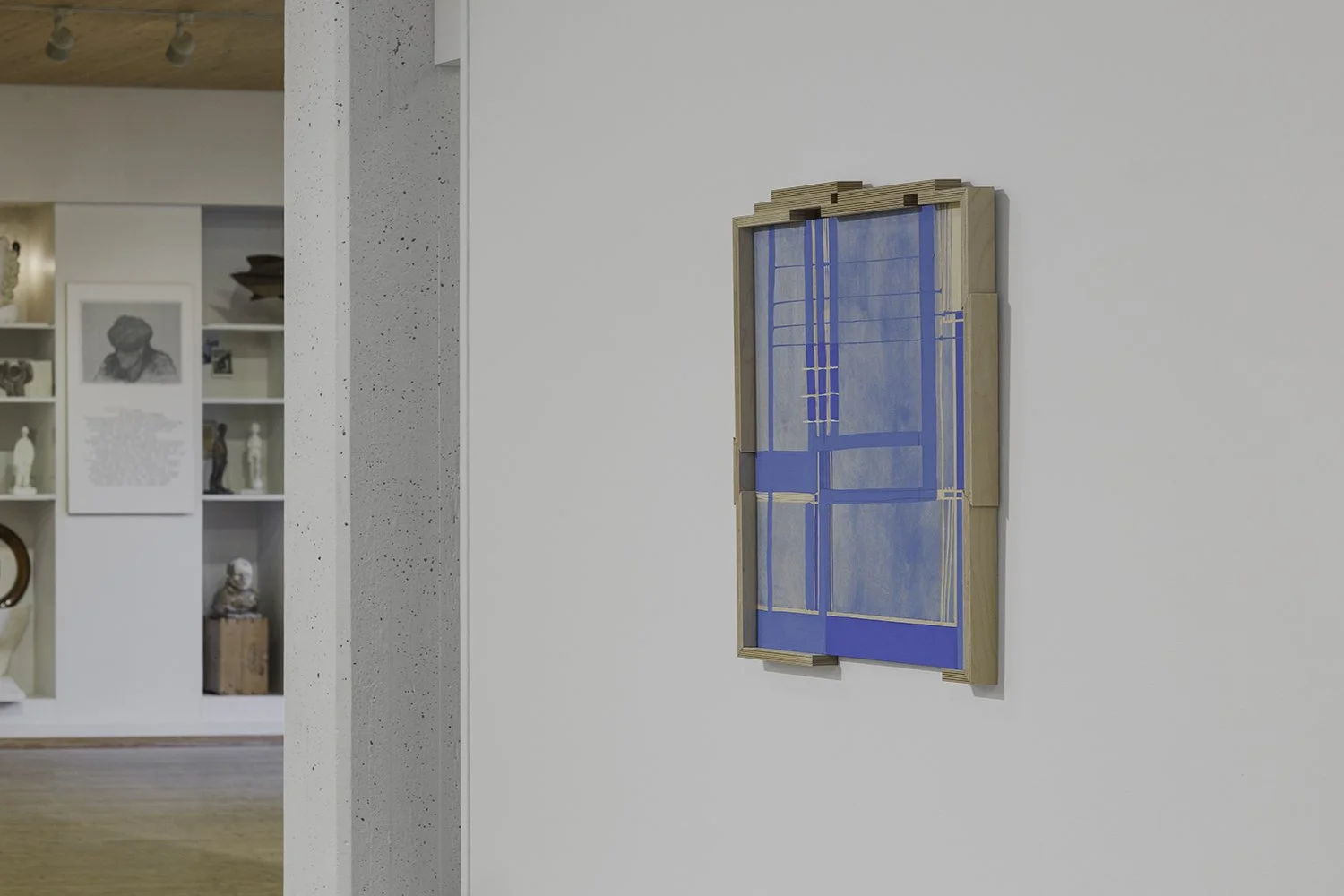
Photo: Lena Johnsen

Link: Kritikk av Anna Ulrikke Andersen, artscene.no

Ting som blir revet ned eller bygget opp/Things that are torn down or built up
Nils Aas Kunstverksted, 04.10-21.12.2025

Interview by Heather Jones, independent curator, and co-founder and Editor of Contemporary Art Stavanger, with artist Mona Orstad Hansen (from the exhibition catalouge).

Heather Jones: Could you begin by telling us about the title, Ting som blir revet ned eller bygget opp (Things that are torn down and built up). It reveals a lot about your work, and sets the tone for the entire exhibition. 

Mona Orstad Hansen: I spend a lot of time working with the titles. The work is non-figurative, and I think the titles can provide an entry point, hint at the process, or just set a tone, as you say. I've been working with three exhibitions in parallel this year, so I have had to think strategically about how some of the works in this collection could be shown in different spaces. My work usually has a site-specific element and takes the architecture of the space into account, so this was an interesting challenge for me. I made these paintings like modules that can be rearranged and put together again in different ways. Though several of the paintings have been shown previously, the composition at Nils Aas Kunstverksted is entirely new. The painting installation Ting som blir revet ned eller bygget opp, III was made specifically for this exhibition and consists of four paintings and sculptural frames. The specific installation is customized for the space. The exhibition’s title references this process, as well as the location itself.

HJ: How do you then approach assembling these works in a new space?

MOH: I always begin by investigating the space and building a model. This museum is built around the life and work of sculptor Nils Aas. The museum displays some of his work as well as a sculptural installation and educational material about his life and process. In this section there are white reliefs – fragments of earlier works assembled together. I became interested in the formal elements and in-between spaces. It seems like things are balancing on top of each other. Even though this is not meant as an artwork, decisions have been made on how to compose this wall. I wanted to make a work using that as a starting reference or impression. 

HJ: You strongly identify as a painter, and you have previously mentioned that you approach painting as a spatial practice. What does this mean for you?

MOH: I don't necessarily see the format of the painting as the end of the painting. When I'm working I see the painting as a starting point to something that can expand. I like to subtly incorporate elements of the gallery space, sometimes physically, sometimes conceptually. The work includes not just the painting itself, but the space around and between the paintings. This is why I like to leave white areas in the paintings; they start relating to the wall behind. I like the contrast between the flat painting and the three-dimensional sculptural frames. The paintings themselves can be quite minimalistic, but the way that they interact with their environments is very nuanced and intentional.

HJ: Yes! One of the things that I always feel when I look at your work is an enhanced awareness of the space that I’m in. I find that really unique. Those unimportant details that my brain has been filtering out are now apparent to me once again. Can you say more about this process?

MOH: My process always begins by making a model of the space, and I then put up photos on the wall. These photos are often things that I walk past on the way to the studio. A doorway, a window, a shadow, fragmented or cutout parts of houses. Sometimes just an angle. Something that interests me and that I know could be a starting point for a painting. 

HJ: Why do those aspects interest you specifically? What is it about these kinds of architectural details that grabs your attention?

MOH: It's almost like looking at sculptures. You walk past something and it's a finished work already. The shapes, complexities, lines. And of course the color and light. 

HJ: Which here in Norway can be very dramatic. I’d like to talk a bit more about abstraction as a method. You seem to strive to strip something down to its most essential parts, a distillation of elements. Is that accurate?

MOH: Yes, absolutely. For me working with painting is a continuous process. It’s cliché to say, but it’s true. I was living in Berlin in the early 2000s and I was very interested in expressive German painting. The paintings that I made in the first ten years of my career were very much building on Abstract Expressionism or neo-expressionism, although I probably would not have said that at the time! There were a lot of layers and things happening. In the end it became like a recipe. I had a period in 2012/2013 that I was almost done with painting. I lost interest and I just felt like stopping altogether. It was a transitional period and I came out of that year not working with layers at all, but working with just a few lines on raw canvas. Everything was brutally simple and required presence in a different way. Rather than painting over things, I made myself keep the first stroke of the paintbrush. And in that way I started to get interested again. Also I started working with only one or two colors at a time. For me it felt like I had finished with something and then started something completely new. I think everything I've done since that has built on from there. It's more about restraint, and I find it a much more experimental approach. 

HJ: In what way?

MOH: I think I just needed to find new relevance. For me it was about finding meaning again rather than repeating myself. That's when I started to combine painting with sculptural elements and think more about the space and painting as an object. My way of working with abstraction also has to do with the process of painting and gestural mark-making, and of course its history. Some abstract paintings that I really like are planned beforehand and very formal and controlled. That is something that I've tried also, but it doesn't come to life for me.

HJ: Is your process entirely intuitive then? Your work is so angular and precise that it would be easy to assume that everything is carefully planned in advance.

MOH: Some things are planned, for example a composition that I might repeat in several paintings, and usually the colors. But then I have to work intuitively within that structure and see if something happens that interests me, a spark that I can then start to work with. It's a back and forth. Something intuitive or accidental happens, and then I can step back and analyze if and how I could build on that. Maybe it’s more painting, or maybe this is where I start working with the sculptural frames. Usually the sculptural frames repeat some of the geometric forms in the paintings and extend the compositions. What I find interesting with the sculptural frames is that, as well as being a three-dimensional object and a contrast to the flat surface, they refer back to the components of a painting. I mostly just focus on being open, and hope to make discoveries that interest me. I have A LOT of paintings that are taken off the stretcher that I’m not happy with. It's so difficult to know why something works, and not something else. 

HJ: Is it a gut feeling? 

MOH: Yeah I think so, and experience. It could be two colors that start interacting in a way that I didn't anticipate. Or it could be something accidental that happens that I actually like. I think lately what's essential is that there is enough air, that the painting is not overfilled.

HJ: Color seems integral in your work. How do you engage with color in your practice?

MOH: I think the color is what often gives the painting its energy. If the color isn't right, it's not going to work. This is especially true when working with so few colors at a time. I've been looking a lot at Josef Albers, and the interaction of color. A few years ago I was surprised to discover his use of photography as reference in his work, like Study for Adobewhich was inspired by the abstract geometry and vivid colors of Mexican architecture. This is something I can relate to and find very interesting. The color, or combination of colors, can be a direct reference to something I have seen in my surroundings, or simply a color that calls to me to work with. Importantly for the development of my practice, for the last five years I have been making my own paint from color pigments. It's challenging because it's more difficult to control the color. 

HJ: Why did you decide to start mixing your own pigments, and how does this affect your work?

MOH: I think painting has a lot to do with practical things, which we don't often talk about. It can be very basic. There was a pandemic and I had more time. I wanted to step away from working on the raw canvas and began working on primed canvas again. Acrylic paint on raw canvas soaks into the canvas and creates a tactile, matte finish. But acrylic on primed canvas has a plastic feeling and stays on top. That was a problem for me. I didn't like that tactile expression. I have this very nice colleague Nils Eger who has been working with egg tempera for many years. He generously showed me how to work with pigments. The pandemic opened time to experiment, which is essential for artists.

Working with the pigments is very interesting because no two pigments are alike. In industrial acrylics, all of the colors behave the same. But on this small scale, an iron oxide red pigment behaves completely differently than another  pigment. And the colors are so rich and matte. The prussian blue is my favorite and looks like velvet.

HJ: You said you wanted to make work that means something for you and others. One of the things that I like about your work, even within the genre of abstraction, is that it isn’t easy. It’s not something that I can simply go and look at and appreciate. I have to interact and make connections to other things in my environment. That's really valuable in a society in which we are so accustomed to consuming images that require nothing of us. Your particular method of abstraction invites engagement, particularly in the way that it echoes the architecture and our surrounding space. 

MOH: That's what I'm hoping to achieve. I’m interested in formal complexity. I want people to study where a particular line comes from and where it goes. Exactly as you said, some things hopefully appear gradually. If you look at the side of the painting, there is also something there, both on the canvas and with the sculptural frames around the canvas. Maybe the frame stops, and there's a gap.

HJ: Yes, and then in that gap the wall behind the painting is visible and becomes part of the work. The distinction between artwork and everything else blurs. What are your hopes for this exhibition? What do you want viewers to take with them when they leave?

MOH: I think of painting as a language in its own right, and it needs to be experienced. I've heard people say that it's very different to see my paintings live than in a photo. Photos don’t capture their tactile quality. I don't want the viewer to go in and just say “this reminds me of XYZ.” I hope that there is a feeling that comes from the exhibition, a greater sensitivity that is developed. I see the exhibition as a finished whole, and I hope that people will notice the relation of the works to each other, to the space, and maybe even to elements outside

HJ: It seems like you want people to leave with an attunement to this new kind of language. 

MOH: Yes, I want people to observe the colors for example. You can have a pale yellow color, and then maybe the next painting has another yellow, but not as pale. I am interested in these subtle nuances, shifts, and relationships between the works. The paintings are each composed carefully and when placed together in the gallery, they form a total composition. There's a dialogue between. That’s something that I hope the viewer feels. 

 I'm also very curious about how the mind works, and the importance of the unconscious in the creative process. Sometimes you need to step away from something and just let the mind work. That is something that is important in my process. And ideally, I would like the viewer to look at my work, and then it's working in the subconscious and it makes sense later, reemerges. 

And finally, I hope that the paintings communicate a sense of risk-taking. I would like the viewers to see that this painting could have failed! This is how I actively work – it's almost a performative element in the work. I start working with a gesture or a mark, and then the paint starts running and you get these accidents. And there is no way I can take them away because of the way I paint. It is just this one layer. I can't hide these things. This is an important point for me.  

HJ: There is an element of honesty inherent in the work. 

MOH: Yes. The work has a life of its own. Even though the paintings together with the sculptural frames are carefully composed, it’s not perfect! And that comes back to the title, which has become a kind of working method for me. Something that is built up and torn down again.